
“I love Jesus. I just don’t think I need church.”
Maybe you’ve said it. Maybe you’ve lived it. You can pray in your car. Listen to a sermon while you work out. Spend Sunday morning at the beach and feel grateful for everything God made.
So why go to church?
Especially when church people can be judgmental. When a pastor has disappointed you. When Sunday is the only morning your family gets to slow down. Those are real questions. They deserve more than a guilt trip. But they also deserve more than an answer that simply tells us what we want to hear.
Can you be a Christian without going to church? Salvation is God’s gift, received through faith in Jesus—not something you earn by attending services. But the New Testament consistently calls Christians into a shared life of worship, service, encouragement, and accountability.
The question is bigger than whether you can miss Sunday and still belong to God. What kind of life is Jesus inviting you to live?
“Follow Your Heart” Sounds Spiritual. Is It Biblical?
Our culture gives us a familiar set of instructions: Trust yourself. Protect your peace. Do what feels right.
There are moments when those phrases express a legitimate need for rest, wisdom, or safety. But they make a poor foundation for following Jesus. Our feelings can tell us what is happening inside us. They cannot always tell us what is true. Sometimes I feel like forgiving someone. Sometimes I feel like making sure they know exactly how wrong they were. Sometimes I want accountability. Usually right up until someone holds me accountable.
Jesus understands the human heart better than we do. In Luke 9:23, He calls His followers to deny themselves, take up their cross daily, and follow Him. That invitation challenges our assumption that comfort is a reliable guide. If I only follow Jesus when I agree with Him, who is actually leading? That question reaches into our relationships, our money, our choices—and our willingness to belong to a church.
What Does the Bible Say About Going to Church?
In Acts 2:42–47, the first Christians devoted themselves to the apostles’ teaching, fellowship, shared meals, and prayer. They cared for one another’s needs and gathered regularly. Their faith had a personal dimension, but it also had a shared life.
Hebrews 10:24–25 tells believers to consider how to encourage one another toward love and good works, continuing to meet together. Notice the purpose: encouraging one another.
Someone needs your encouragement. Someone needs the wisdom God has grown in you. Someone needs the meal you could bring, the prayer you could offer, or the steady friendship you could become. And you need those things, too.
In 1 Corinthians 12, Paul describes believers as members of one body. Different gifts. Different responsibilities. Mutual dependence. Following Jesus includes learning to say, “I need help,” and learning to notice when someone else does. That is difficult to practice when nobody knows you.
A Sermon Can Teach You. People Help You Practice.
Online teaching can be a wonderful resource. For people who are homebound, ill, caregiving, or facing other barriers, it can provide a vital connection. But listening to Christian teaching and sharing your life with Christians are different experiences.
A podcast can explain patience. A relationship gives you opportunities to practice it. A message can teach forgiveness. Community brings you close enough to other imperfect people to discover where you still need grace. The New Testament calls us to carry one another’s burdens, confess our sins to one another, and encourage one another (Galatians 6:2; James 5:16; 1 Thessalonians 5:11).
Those commands require relationships. You can listen to a hundred messages about vulnerability while making sure nobody knows you’re struggling. At some point, spiritual growth involves letting a trustworthy person into the conversation.
What If You’ve Been Hurt by Church?
Then this conversation needs care. Church hurt can include betrayal, humiliation, manipulation, spiritual abuse, or leaders protecting themselves at someone else’s expense. Those wounds should be taken seriously.
Jesus takes the conduct of spiritual leaders seriously, too. In Matthew 23, He confronts hypocrisy and leaders who burden others while seeking status for themselves. Being harmed by a church does not mean you failed God.
You do not owe an unsafe leader renewed access to your life. Forgiveness does not require immediate trust or returning to an abusive environment. Rebuilding trust may take time, support, and clear boundaries. You can take that process slowly.
As you consider a church, ask questions. How do leaders respond when challenged? Is there meaningful accountability? Can people raise concerns without being shamed? Are vulnerable people protected? A healthy church should welcome those questions. The invitation to Christian community should leave room for honesty about what happened to you—and hope that trustworthy relationships are still possible.
Does Missing Church Make You a Bad Christian?
A missed Sunday cannot tell the whole story of someone’s faith. People get sick. Work schedules create conflicts. Disabilities, transportation problems, and caregiving responsibilities can make gathering difficult. God sees the circumstances other people cannot see. Churches have a responsibility to care for people who cannot attend and help them remain connected.
But when gathering is possible and we repeatedly choose distance, it is worth asking why. Am I exhausted and in need of help? Am I afraid of being hurt again? Have I made so little room for God that worship always loses to something else? Am I avoiding a conversation I know I need?
Different answers call for different next steps. Honest questions give us somewhere to begin.
What If Church Feels Uncomfortable?
Visiting a church can feel awkward. You may not know the songs, understand the language, or know where to take your kids. You may also hear something from Scripture that challenges a choice you’ve been making. Discomfort deserves discernment. Sometimes it signals that something is unhealthy. Sometimes it comes with learning, repentance, or being new.
A healthy church will respect your dignity while taking the Bible seriously. It should give you room to ask questions and encourage you to keep growing. And that applies to the people already attending. We cannot invite people into community while refusing to learn names, make room, listen carefully, or admit when we are wrong.
The call to love one another belongs to all of us.
How to Start Going Back to Church
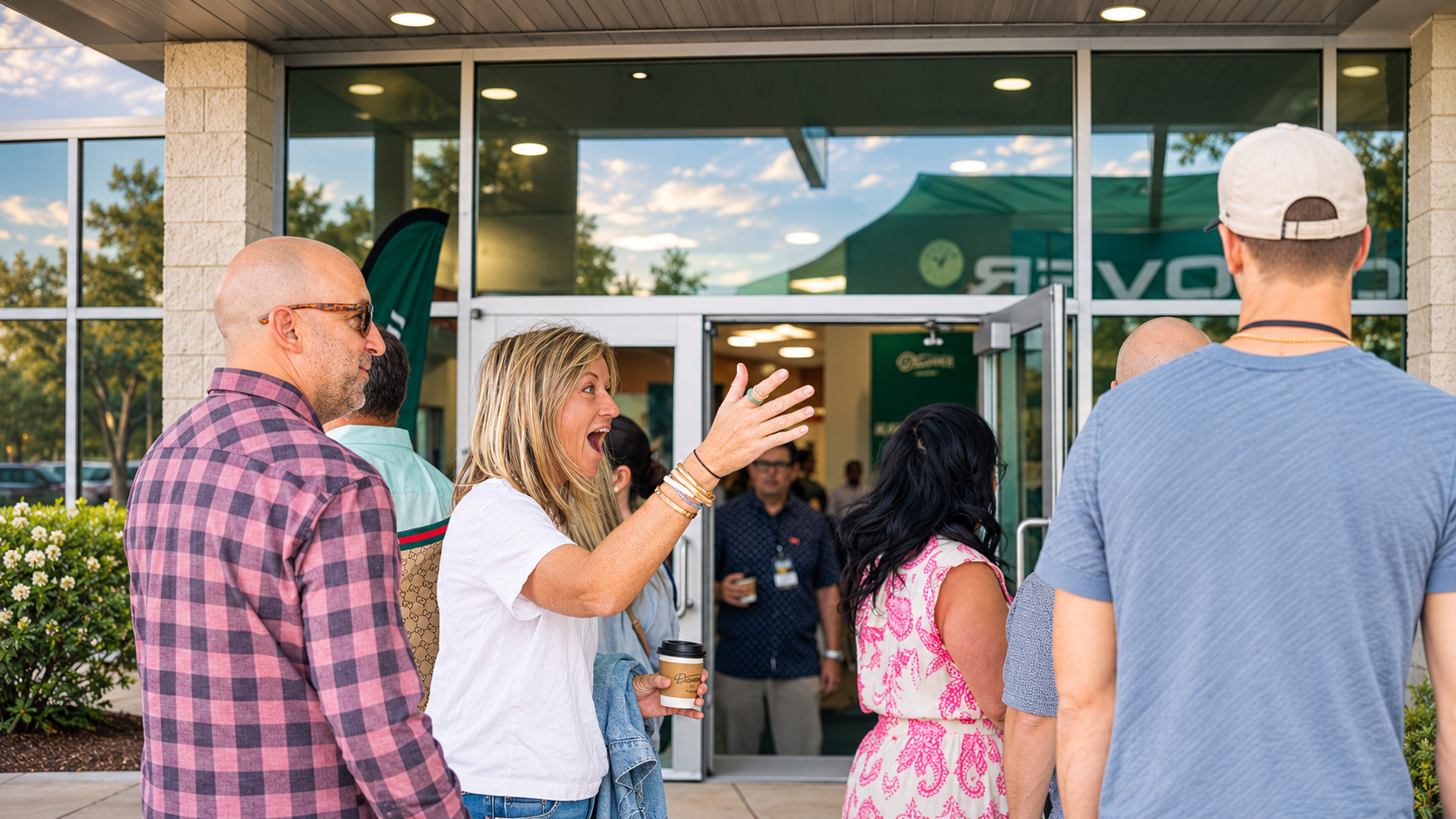
You do not have to solve every theological question before walking through the doors. Start with one visit. Look for a church that teaches Scripture faithfully, keeps Jesus central, practices accountability, and treats people with care. Then take one step toward connection. Introduce yourself. Ask a question. Tell someone you’re new—or that coming back took courage.
Over time, look for a smaller setting where people can know you. Faith grows through ordinary relationships: praying together, sharing meals, serving, and showing up when life gets hard. If you’re exploring Christianity, you are welcome to begin before you know exactly what you believe.
At the center of the Christian faith is Jesus, who died for our sins and rose again. His grace invites us to turn toward Him, receive forgiveness, and learn a new way of living. Church is a place to explore that invitation alongside others.
Looking for a Church in San Marcos, CA?
We’d love to welcome you to Discover Church.
Whether you’re curious about Jesus, returning after years away, or looking for Christian community in North County San Diego, there is room to take your next step here.
We meet Sundays at 10:00 a.m. at Mission Hills High School, 1 Mission Hills Ct., San Marcos, CA 92069. Our services include worship and practical Bible teaching, with Discover Kids available for families. You can find current details on our Plan Your Visit page. Come with your questions. Come if you’re unsure what you believe. Come if it’s been a long time.
Plan your visit to Discover Church this Sunday.
We’d love to meet you.
Discover Church is a new life-giving church in San Marcos, CA, meeting at Mission Hills High School. Our mission is to help you follow Jesus, find community, and discover your purpose so you and your family can win at what matters most. Plan your visit this Sunday
